Thai Cuisine
Thai cuisine is one of the most celebrated food traditions in the world, and for good reason. It manages to be at once fiery and refreshing, rustic and refined, familiar and surprising. If you are planning a trip to Thailand, or simply want to understand what makes a bowl of tom yum so addictive, this page is your complete starting point. Think of it as a map of the territory: once you grasp the core ideas below, every dish you encounter will make far more sense.
What Is Thai Cuisine, Exactly?
At its heart, Thai cuisine is the art of balance. Where many culinary traditions build a dish around one dominant flavor, Thai cooking layers several at once: sweet, sour, salty, spicy, and bitter or umami notes all share the stage. A well-made dish should have no single flavor shouting over the others. A common analogy is an orchestra: chili is the percussion, lime is the violin, fish sauce is the bass line, and palm sugar quietly holds the harmony together.
This balance is achieved through a pantry of ingredients that define the cuisine:
- Fish sauce (nam pla): the salty, umami backbone used in nearly everything, from stir-fries to dipping sauces.
- Lime and tamarind: the sour element, bright and sharp in soups, salads and dressings.
- Palm sugar: a caramel-like sweetness that rounds out heat and acidity.
- Chilies: fresh bird’s-eye chilies, dried chilies and chili pastes, adjusting the fire level dish by dish.
- Fresh herbs: lemongrass, galangal, kaffir (makrut) lime leaves, Thai basil and cilantro, usually added at the end so their aromas stay vivid.
Rice is the true anchor of every meal. Thais traditionally say that a meal without rice is not a meal at all, and the word for eating — kin khao — literally means « to eat rice. » Noodles, introduced through Chinese influence, are the other great staple.
The Four Regional Styles of Thai Food
Thailand is not culinarily uniform. Each region has its own climate, history and flavor profile, and tasting your way across them is one of the most rewarding ways to experience the country.
Northern Thailand (Lanna Cuisine)
Around Chiang Mai and Chiang Rai, food is milder, earthier and often sticky-rice based. Dishes are influenced by neighboring Myanmar and Laos. Look for khao soi, a coconut curry noodle soup with crispy and soft noodles, and nam prik num, a green chili dip served with raw vegetables. Meats were traditionally slow-grilled or stewed rather than fried.
Isan (Northeastern Thailand)
Isan food is bold, funky and famously spicy, sharing deep roots with Lao cuisine. Sticky rice is the staple, eaten by hand. Signature dishes include som tam (green papaya salad, pounded in a mortar), larb (a minced meat « salad » with toasted rice powder and lime), and grilled chicken (gai yang). Fermented fish sauce (pla ra) gives many dishes their distinctive depth.
Central Thailand
The region around Bangkok is the refined heart of the cuisine: sweeter, more layered, and what most restaurants abroad serve. Iconic dishes include tom yum goong (hot and sour shrimp soup), green curry, and the royal-influenced khao chae, a seasonal dish of rice in jasmine-scented iced water served with savory side dishes.
Southern Thailand
Close to Malaysia, the south delivers the hottest food in the country, with heavy use of turmeric, coconut and, uniquely, seafood. Massaman curry, with Persian-influenced spices like cinnamon and cardamom, hails from this region, as does gaeng som, an intensely sour and fiery fish curry without coconut milk.
Iconic Dishes Every Visitor Should Know
If Thai food were a language, these dishes would be its essential vocabulary:
- Pad Thai: stir-fried rice noodles with egg, tamarind, fish sauce, tofu or shrimp, peanuts and lime. Famously popularized in the mid-20th century as part of a national identity campaign.
- Tom Yum Goong: the hot-and-sour shrimp soup perfumed with lemongrass, galangal and lime leaves — the clearest single expression of Thai flavor balance.
- Green, Red and Massaman Curries: coconut-milk based stews distinguished by their curry pastes. Massaman is milder, sweeter and spiced with warm aromatics; green curry is fresh and fiery.
- Som Tam: shredded green papaya pounded with chili, lime, fish sauce and palm sugar, with peanuts and dried shrimp.
- Pad Krapow: a fast, peppery stir-fry of minced meat with holy basil, chili and garlic, almost always topped with a crispy fried egg.
- Khao Pad: Thai fried rice, a humble but dependable benchmark of a cook’s skill.
- Mango Sticky Rice (Khao Niao Mamuang): the classic dessert of coconut-creamed sticky rice with ripe mango.
How Thais Actually Eat: Meal Culture and Etiquette
Understanding Thai dining habits will make any food experience smoother and more enjoyable.
- Sharing is the norm: dishes are ordered collectively and placed in the middle of the table. Each person takes what they want, mixing flavors across dishes.
- No courses: unlike Western meals, everything arrives when ready, and there is no strict order to eating.
- Spoon and fork, not chopsticks: the spoon (in the right hand) pushes food onto the fork (left hand). Chopsticks are used mainly for noodle dishes.
- Individual heat: many dishes are served mild, with chilies offered on the side. You control your own spice level.
- Street food is central: some of the best food in Thailand is cooked at roadside stalls and markets, often by specialists who have perfected one or two dishes over decades.
A helpful way to picture it: a Thai meal is like a potluck on one table, where every dish is a different instrument playing the same balanced melody.
Reading a Thai Menu with Confidence
Menus can feel intimidating at first, but a few patterns unlock everything:
- Khao means rice; kuay teow means noodles; gaeng means curry; tom indicates a boiled soup; yam means a spicy, tangy salad; pad means stir-fried.
- Proteins: gai (chicken), moo (pork), nuea (beef), goong (shrimp), plaa (fish), kai (egg).
- Spice labels like « Thai spicy, » « medium » or « mild » are usually calibrated to the customer, not to how locals eat. If a menu offers local-level heat, know what you are signing up for.
For beginners, a safe and satisfying first order looks like this: a mild curry (massaman), a classic stir-fry (pad krapow), a soup (tom yum), and plain jasmine rice. This single order covers all the major flavor dimensions of the cuisine.
Practical Tips for Eating Well in Thailand
- Follow the crowd: a busy stall with locals is a reliable sign of freshness and turnover — food that sits is food that spoils.
- Eat with the seasons and the clock: morning markets favor noodle soups and congee; evenings bring grilled seafood and stir-fry woks.
- Adjust spice gradually: ask for « phet nit noi » (a little spicy) first, and build up. Thai chilies are far hotter than they look.
- Carry small bills: street vendors rarely handle large notes, and prices are often paid by exact change.
- Stay hydrated and pace yourself: very spicy food in a hot climate is a marathon, not a sprint.
Why Thai Cuisine Rewards Curiosity
What sets Thai food apart is not just its flavor, but its accessibility. There is no formal barrier to entry: the best versions of national dishes are often found on plastic stools rather than in dining rooms, and asking questions about food is one of the easiest ways to connect with local people. Learning even a handful of dish names and flavor concepts transforms eating from a simple necessity into the richest possible lens on Thai culture, geography and history.
Use this page as your reference point, and treat every meal — from a five-dollar street bowl to a proper curry paste pounded by hand — as a small lesson in balance, generosity and craft.
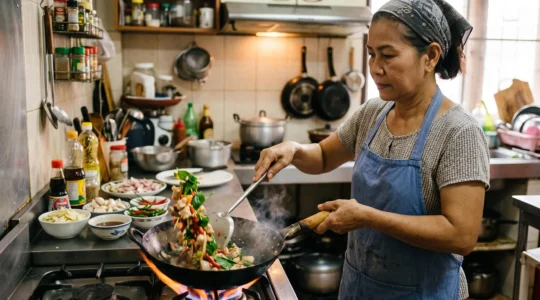
How to Cook Thai Food the Way Thais Actually Do: The 7 Techniques Cookbooks Omit
Your Thai curry contains every ingredient listed in the recipe. The fish sauce is measured, the coconut milk is simmering,…
Lire la suite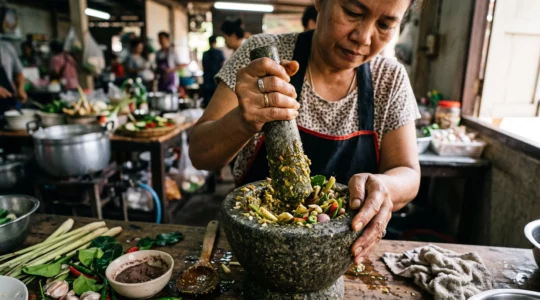
How Thai Cooks Build 12-Layer Flavor Profiles: The Technique Behind « Impossibly Complex » Tastes
A Thai curry can contain the same ingredients as a home-cooked version yet taste remarkably different. The missing element is…
Lire la suite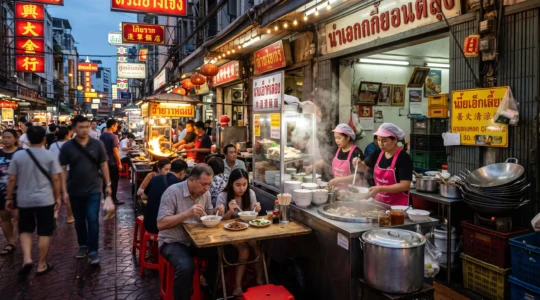
How to Eat Your Way Through Yaowarat: The Bangkok Chinatown Food Route Locals Follow
Yaowarat Road can overwhelm even experienced street-food travelers. Noodle carts compete with seafood grills, dessert counters spill into side alleys,…
Lire la suite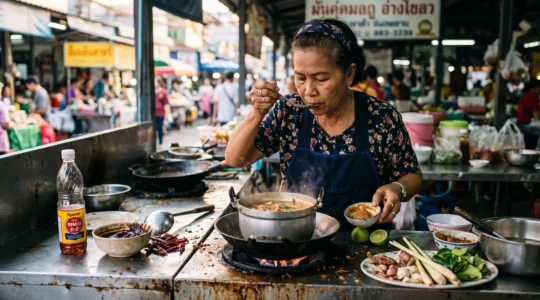
How Thai Cooks Balance Sweet, Sour, Salty, Bitter, and Spicy in Every Dish
A spoonful of Thai soup can begin with bright lime, develop into savory depth, deliver chili heat, and finish with…
Lire la suite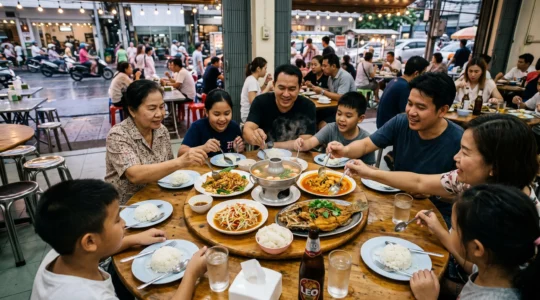
How Thai Meals Function as Social Architecture: The Communal Table System Westerners Misunderstand
A Thai meal is not simply a collection of recipes placed on a table. In traditional family-style dining, it is…
Lire la suite