Cities & Regions
Every journey begins with a map and a question: where exactly should I go? Yet that question is broader than it looks. Travelers rarely choose a single destination — they choose between cities and regions, two very different ways of experiencing the world. A city concentrates energy, culture, and convenience into a walkable handful of neighborhoods. A region spreads its treasures across valleys, coastlines, and villages, rewarding those who slow down and look around. Understanding this distinction is the foundation of smart trip planning, and this page is here to walk you through it, step by step, in plain language.
What Do We Mean by Cities and Regions?
Think of a destination like a book. A city is a single, dense chapter — packed with detail, plot twists, and characters you meet on every corner. A region is the whole volume: it contains the city, but also the countryside around it, the smaller towns, the food traditions, and the landscapes that give the city its character.
In practical travel terms, a city is an urban destination defined by its density: museums, restaurants, public transport, and nightlife clustered within a few square kilometers. A region is a larger geographic area — often named after a coastline, a mountain range, a wine-producing zone, or an administrative territory — that unites several towns and natural features under one identity. Neither is better than the other; they simply answer different travel needs.
Why This Distinction Matters When Planning a Trip
Choosing between a city break and a regional journey changes almost every decision you will make afterward: how long to stay, how to get around, how much to budget, and even what to pack. Travelers who mix up the two often end up frustrated — for example, renting a car for a city trip they never needed, or booking only two nights in a region that deserves a full week.
The City Traveler Profile
City trips suit people who love stimulation and spontaneity. Everything is within reach: you can visit a museum in the morning, wander a market at lunch, and catch live music after dinner without ever needing a timetable.
- Transport: walking, metros, buses, and ride-sharing; a car is usually a burden.
- Pace: intense days, with sights grouped closely together.
- Budget driver: accommodation, which is typically pricier per night in central districts.
- Best duration: two to five days for most major cities.
The Region Traveler Profile
Regional travel rewards curiosity and patience. Instead of checking off landmarks, you settle into a rhythm: a base village or small town, daily excursions, conversations with locals, and landscapes that change with the light.
- Transport: a rental car, regional trains, or organized tours are often essential.
- Pace: slower, with fewer but deeper experiences per day.
- Budget driver: transport between places and seasonal availability.
- Best duration: five to fourteen days to justify the logistics.
The Hidden Geometry: How Cities and Regions Connect
Here is an analogy that simplifies everything: cities are the hubs, regions are the spokes. Almost every great region on Earth is organized around one or several gateway cities. Fly into the hub, then fan outward into the surrounding territory. This hub-and-spoke logic is the single most useful planning tool a traveler can master.
Consider a classic example: a traveler lands in a major capital, spends three days absorbing its museums and markets, then takes a two-hour train to a wine valley or coastal strip where they rent a car and spend a week hopping between villages. That single itinerary contains both worlds — and this pattern repeats on every continent. The practical takeaway is simple: let the city be your entry point, and let the region be your experience.
How to Choose: A Simple Four-Question Method
When beginners feel paralyzed by choice, it is usually because they are comparing apples and oranges — a city against a region — without a decision framework. Answer these four questions in order, and the right answer usually becomes obvious.
- How much time do you actually have? Under four days, favor a city or a single small region. Over a week, a region — or a city plus its region — becomes worthwhile.
- What energizes you? If crowds, architecture, and nightlife fill your battery, choose urban. If silence, nature, and slow meals do, choose regional.
- What is the season? Cities are largely season-proof; regions often are not. A coastal region in the off-season can be half-closed, while a mountain region in high season can be crowded and expensive.
- How comfortable are you with logistics? Cities forgive planning mistakes; regions punish them. If you dislike driving abroad or coordinating timetables, anchor your trip in a city with day trips.
A useful rule of thumb: if you hesitate between two destinations, pick the one whose weather during your dates and transport options you can verify with confidence. Certainty about logistics beats enthusiasm about sights every time.
Key Concepts Every Traveler Should Know
Gateways and Hubs
A gateway city is where long-distance transport lands you — usually home to the main international airport. Some gateways are destinations in their own right; others are purely functional. Checking which type you are dealing with prevents the common mistake of « wasting » two nights in a transit city, or conversely, rushing through a place that deserved a full visit.
Day Trips and the 90-Minute Rule
One of the most reliable patterns in travel geography: the most rewarding day trips from a major city usually sit within about 90 minutes of travel. Beyond that threshold, the round trip eats too much of your day. Use this rule to build a hybrid trip — city base, regional excursions — without renting a car or changing hotels.
Seasonality
Regions live and die by the calendar. Coastal areas swell in summer; mountain areas have two peaks (winter sports and summer hiking); wine regions shine at harvest time. Cities, by contrast, run at full speed nearly year-round, only quieting during major local holidays. Matching your dates to a region’s natural rhythm is the difference between a magical trip and a disappointing one.
The Urban-Rural Cost Gradient
Prices do not fall evenly with distance — they fall in steps. A town one hour from a capital may cost 30–50% less for accommodation and meals, while offering a fraction of the traffic and queues. Budget-conscious travelers can exploit this gradient by sleeping just outside the expensive zone and visiting it by day.
Common Mistakes to Avoid
- Overloading the itinerary. Trying to see five regions in ten days means spending your trip in transit. As a beginner, halve your wishlist, then halve it again.
- Ignoring travel time between places. A map distance of 100 kilometers can mean three hours of mountain road. Always estimate in hours, not kilometers.
- Booking the region in the wrong season. Verify what is actually open — restaurants, trails, ferries — during your specific weeks.
- Treating the gateway city as a mere airport. Many arrivals hubs hide world-class old towns worth at least a day.
- SkipRenting a car in a dense city. Parking fees, restricted zones, and traffic make urban car rental a money pit. Rent only when leaving for the region.
A Practical Planning Checklist
- Define your total number of travel days, including transit.
- Decide your travel style: urban energy, regional immersion, or a hybrid.
- Identify the logical gateway city for your chosen region.
- Apply the 90-minute rule to shortlist possible day trips.
- Check seasonality: weather, opening periods, and local festivals.
- Estimate your budget using the urban-rural cost gradient.
- Book accommodation first in the place where you will sleep most nights, then arrange transport between hubs.
Final Thoughts: One World, Two Speeds
Cities and regions are not competing options — they are two speeds of the same journey. The city teaches you about a place’s present; the region reveals its roots. The most memorable trips usually blend both: a few dense, exhilarating days at the hub, followed by the open road and the quieter stories beyond it. Use the framework on this page to decide your speed, plan with confidence, and let the destination — whether a skyline or a valley — do the rest. Wherever you go next, you now have the tools to choose it for the right reasons.
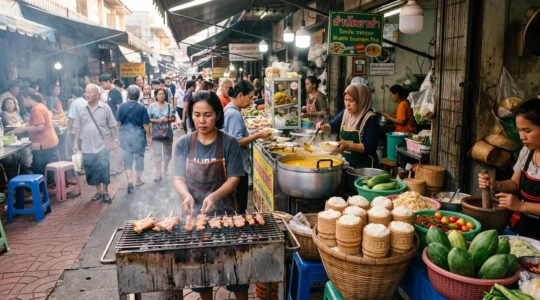
How to Recognize Thailand’s 4 Regional Cultures: The Dialect, Dish, and Dance That Define Each Zone
A greeting in a Chiang Mai market, a basket of sticky rice in northeastern Thailand, and a turmeric-yellow curry in…
Lire la suite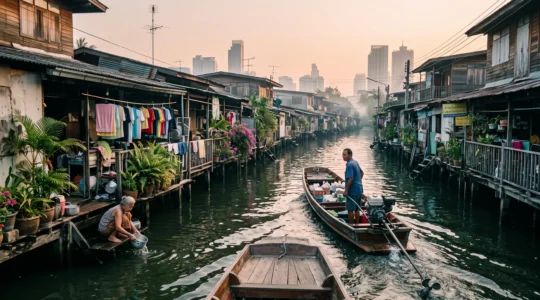
How to Visit Bangkok’s Khlong Communities: The Water-Based Villages Surviving Urban Sprawl
Beyond Bangkok’s elevated railways, shopping districts and glass towers, residential canals still carry traces of a city once organized around…
Lire la suite
How Thailand’s Geography Divides Into 4 Distinct Climate Zones That Dictate Your Packing List
A suitcase packed for Bangkok’s tropical heat can leave you shivering on a northern mountain at sunrise or struggling through…
Lire la suite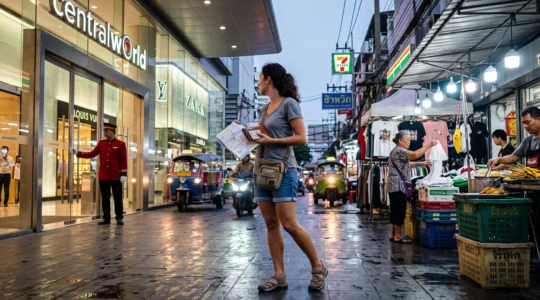
How to Choose Your Bangkok Shopping District: Luxury Malls, Wholesale Markets, or Street Bazaars
Bangkok’s shopping districts are not interchangeable. A designer handbag, a bundle of inexpensive T-shirts, a handmade ceramic bowl and a…
Lire la suite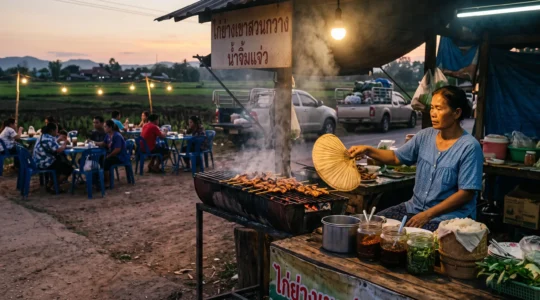
Why Isan Is Thailand’s Most Authentic Region: The Rural Northeast 80% of Tourists Skip
In northeastern Thailand, dinner might begin with a basket of sticky rice, a bowl of fermented-fish papaya salad and grilled…
Lire la suite