Destinations in Thailand
Understanding Thailand: A Country of Four Travel Personalities
Thailand is not one destination but a collection of very different worlds packed into a single country. Think of it as a restaurant menu with four distinct sections: a bustling capital, a tropical south, a mountainous north, and a quieter, more rural heartland. Each offers its own rhythm, climate and experiences, and understanding these differences is the first step to planning a trip that actually matches your expectations.
Most travelers begin their journey in Bangkok, the country’s economic and cultural nerve center, before spreading out toward the coasts or the mountains. With roughly 3,200 kilometers of coastline, more than 1,400 islands, and ancient kingdoms concentrated around the Chao Phraya River basin, Thailand rewards travelers who match their itinerary to their personal travel style rather than following a single prescribed route.
Bangkok: The Gateway City and Urban Benchmark
Nearly every itinerary touches Bangkok, and for good reason. The city handles tens of millions of international arrivals each year and serves as the country’s transport hub. But Bangkok deserves more than a layover. It is a city of contrasts where golden temples sit beside glass towers, and floating markets operate a short taxi ride from mega shopping malls.
What to Prioritize in the Capital
- The Grand Palace and Wat Phra Kaew — the historic and spiritual heart of the old kingdom, home to the Emerald Buddha.
- Wat Arun and Wat Pho — riverside temples best visited early morning or at sunset to avoid heat and crowds.
- The Chao Phraya River and its canals — the city’s original highways, still the fastest way to move between districts.
- Neighborhoods like Chinatown (Yaowarat) — a street-food district where a single evening can cover ten memorable meals.
A useful analogy: Bangkok is like the cover of a book — it gives you immediate impressions and essential context, but the deeper chapters lie elsewhere. Two to three days is usually enough for a first visit.
The Southern Islands and Beaches: Two Very Different Coasts
Thailand’s south is split by the narrow Kra Isthmus into two coastlines with distinct seasons and characters. Choosing the right coast at the right time of year is the single most impactful decision a beach traveler can make.
The Andaman Sea Coast (West)
Home to Phuket, Krabi, Railay Beach and the Phi Phi Islands, this coast features dramatic limestone cliffs rising straight out of turquoise water. The dry season runs roughly from November to April. Landscapes here are cinematic — the karst formations of Phang Nga Bay look like stone giants wading through the sea.
The Gulf of Thailand Coast (East)
Koh Samui, Koh Phangan and Koh Tao dominate this side, with a reversed weather pattern: best conditions from roughly May to September. Koh Tao is a global reference for affordable diving certifications, while Koh Samui balances resort comfort with accessible local culture.
Choosing Your Island Style
- Convenience and infrastructure: Phuket, Koh Samui.
- Party and social scene: Koh Phi Phi, Koh Phangan.
- Quiet and raw nature: Koh Lanta, Koh Yao Noi, Koh Kood.
- Diving and snorkeling: Koh Tao, the Similan Islands (seasonally open).
As a practical case: a traveler visiting in December should favor the Andaman side, while one traveling in July will find calmer seas and better prices in the Gulf. Ignoring this seasonal split is the most common planning mistake for first-time visitors.
Northern Thailand: Mountains, Temples and Slow Travel
The north offers what the coast cannot: cool mountain air, forested hills, ethnic minority villages and a slower cultural pace. Chiang Mai, the region’s capital, is often described as Bangkok’s thoughtful sibling — same essential Thai identity, far fewer crowds, and a Old City surrounded by moats and centuries-old temples.
Key Northern Destinations
- Chiang Mai: temple hopping, cooking schools, artisan markets and a renowned digital-nomad community.
- Chiang Rai: the striking White Temple (Wat Rong Khun) and the Golden Triangle region where Thailand, Laos and Myanmar meet.
- Pai: a laid-back valley town popular for scooter loops, hot springs and canyon sunsets.
- Mae Hong Son: for experienced travelers seeking remote mountain roads and Burmese-influenced temple architecture.
The ideal window for the north is November to February, when temperatures in the mountains can drop to a refreshing 15°C at night — a welcome contrast to tropical humidity.
Central and Eastern Thailand: The Underrated Heartland
Between Bangkok and the north lies a region most itineraries rush through, yet it contains some of the country’s richest historical layers. Ayutthaya, the former royal capital destroyed in the eighteenth century, offers vast temple ruins best explored by bicycle. Nearby Kanchanaburi combines WWII history — the famous Death Railway and Bridge over the River Kwai — with national parks and waterfalls.
To the east, Koh Chang and the Trat archipelago provide a quieter alternative to the famous southern islands: rainforest-covered islands, small fishing villages and beaches that retain a local character. This region works especially well for travelers with limited time who want substance without long-haul connections.
Practical Framework: How to Choose Your Destination
Rather than trying to see everything, use a simple three-question filter:
- When are you going? Match the season to the coast: Andaman for the cool months, Gulf for the warm months, north for November through February.
- How long do you have? Under 10 days, limit yourself to two bases (for example Bangkok + one island, or Bangkok + Chiang Mai). Over two weeks, a three-stop route becomes comfortable.
- What pace suits you? Thailand rewards travelers who slow down. Moving every two days turns a holiday into logistics management.
Think of your itinerary like a good Thai curry paste: a few well-chosen ingredients blended patiently produce far better results than a dozen elements thrown together in a hurry.
Getting Around and Practical Considerations
- Domestic flights connect Bangkok to Chiang Mai, Phuket, Krabi and Koh Samui in about an hour to ninety minutes, often at very reasonable fares.
- Trains are comfortable for overnight routes (Bangkok–Chiang Mai is the classic) and offer a scenic, low-stress alternative.
- Ferries and speedboats serve the islands; schedules tighten during monsoon months, so build buffer time into onward bookings.
- Visa and entry rules vary by nationality and change periodically — always verify the current regulations before departure.
Budget-wise, Thailand remains one of Southeast Asia’s most accessible destinations: street meals from around 40–60 baht, mid-range guesthouses widely available, and premium experiences (private boat trips, spa retreats, boutique hotels) that cost a fraction of equivalent prices in Europe or North America.
Final Perspective: Traveling Thailand with Confidence
Thailand’s destinations work as a system, not a checklist. The capital provides context, the islands deliver relaxation, the north reveals culture and nature, and the central plains anchor everything in history. Start with the region that matches your season and travel rhythm, add one contrasting second stop, and leave room for the spontaneous moments — a night market conversation, a hidden temple, an unplanned island detour — that consistently become the memories travelers carry home.
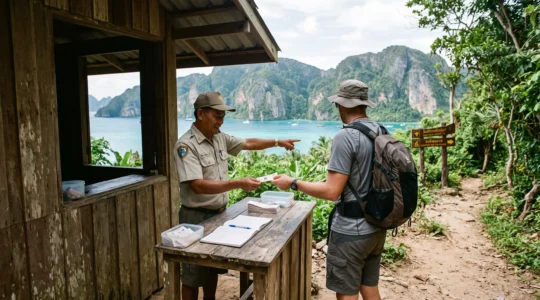
How to Visit Thailand’s National Parks Responsibly: The Regulations That Protect Ecosystems
Visiting Thailand’s national parks responsibly means more than avoiding litter. It requires understanding which protected areas permit tourism, paying the…
Lire la suite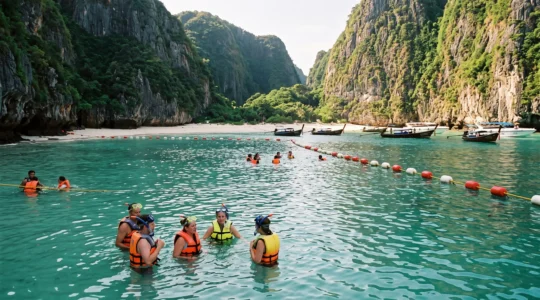
How Maya Bay Recovered From Overtourism: The Closure That Saved Thailand’s Most Famous Beach
In 2018, Thailand closed one of its most photographed beaches to tourists. Maya Bay, the limestone-framed cove made internationally famous…
Lire la suite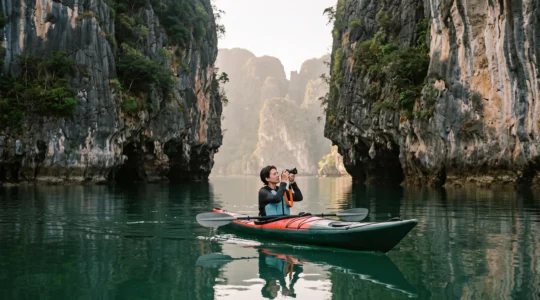
How to Photograph Phang Nga Bay’s Karsts: The Kayak Position That Beats Tour Boats
The most effective position for photographing Phang Nga Bay‘s limestone towers is often not a tour-boat deck. It is a…
Lire la suite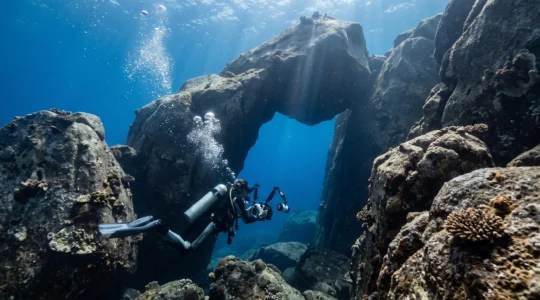
How to Dive the Similan Islands: The Liveaboard vs Day Trip Decision for Photographers
The Similan Islands offer underwater photographers something that many tropical reef destinations cannot: enormous granite boulders forming natural arches, narrow…
Lire la suite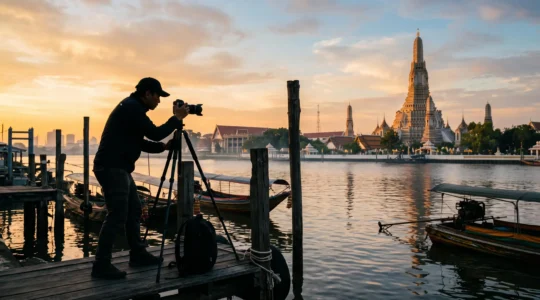
How to Photograph Wat Arun at Dawn: The 6:How to Recognize Thailand’s 4 Regional Cultures: The Dialect, Dish, and Dance That Define Each Zone
Wat Arun rewards photographers who understand the direction of light before choosing a riverbank. The Temple of Dawn stands on…
Lire la suite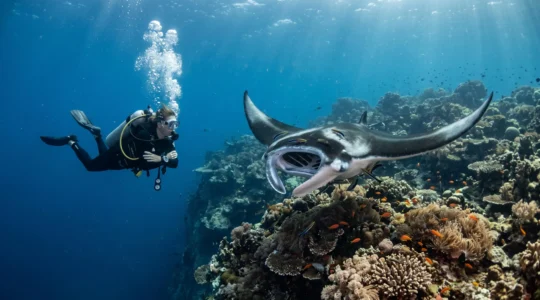
Where to Find Untouched Marine Life in the Andaman Sea: The 5 Islands 90% of Tourists Miss
The Andaman Sea’s most rewarding wildlife encounters are rarely found by following the busiest island-hopping routes. Beyond Phuket’s crowded beaches…
Lire la suite